-
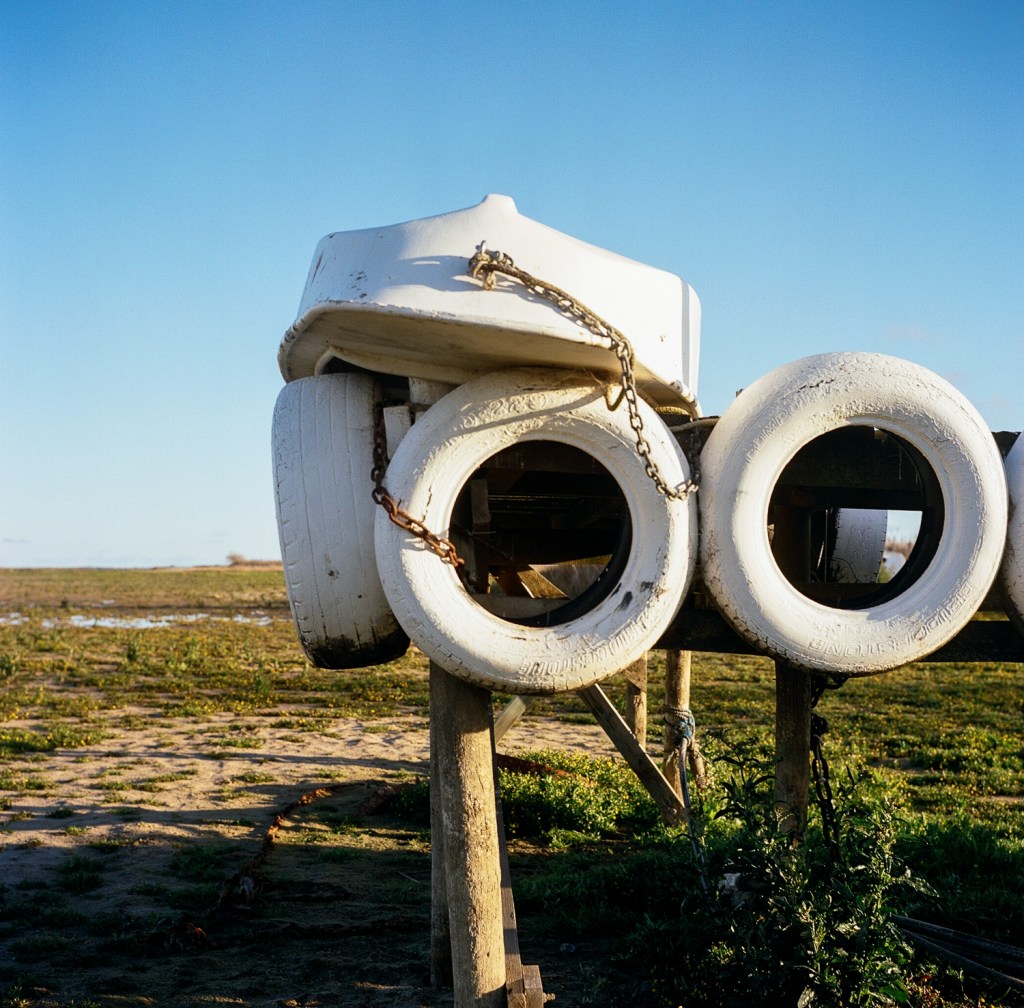
The 1st Our Waters exhibition has been planned for the SALA Festival in Adelaide in 2019. Each photographer takes an image from the Godson Collection and responds to it. There will be six photographers and 12 prints in the exhibition.
-

It was a welcome relief to come across pockets of habitat in the Lower Lakes and the Coorong National Park that were in a healthy condition, despite the lack of river flow during the Millennium Drought (1997–2009) in south-eastern Australia. These low flows happened within the proposed Anthroprocene period, which is a time when much of…
-

One of the frequent responses to the common experience of landscape loss in Australia’s industrial modernity –eg., salt ladened landscapes, dried out wetlands, low flows in our rivers, on-going land clearing and the loss of biodiversity in Australia—is that of nostalgia, or a yearning for what has been lost in the Anthropocene. The rivers used to flow with…
-

Clearing the land of vegetation for agriculture can often mean salty landscapes and salt lakes as well as salty ground water that flows into the River Murray. The felling of billions of trees (approximately 15 billion) to make room for the farming in the Murray-Darling Basin, which has led to economic growth and national prosperity, …
-
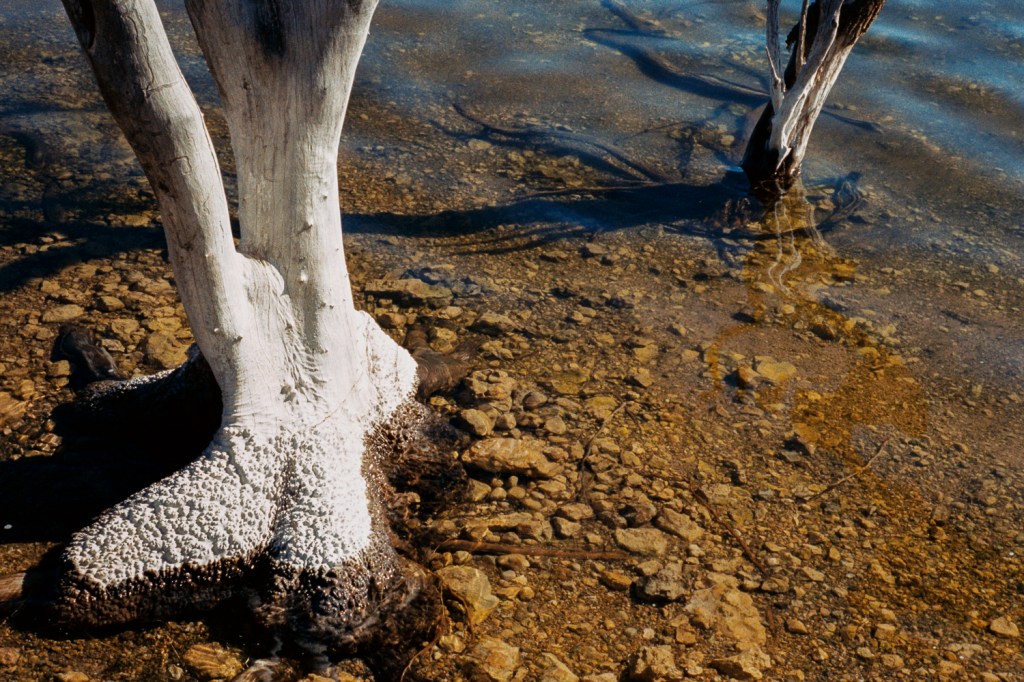
When I was working in the Senate as a policy/political advisor prior to 2006 I realised that one of the crucial aspects of the management of the River Murray in South Australia was the salt interception schemes (SIS) with their associated disposal basins. The current salt management in the Murray-Darling Basin aims to intercept the…
-

Towards the end of the Millenium Drought (1997-2009) we visited the Tolderol Game Reserve, which on the northern shore of Lake Alexandrina and is east of Pt Sturt. We wanted to see what had happened to this migratory bird sanctuary as a result of this decade long drought. This was more than a standard dry time which…
-
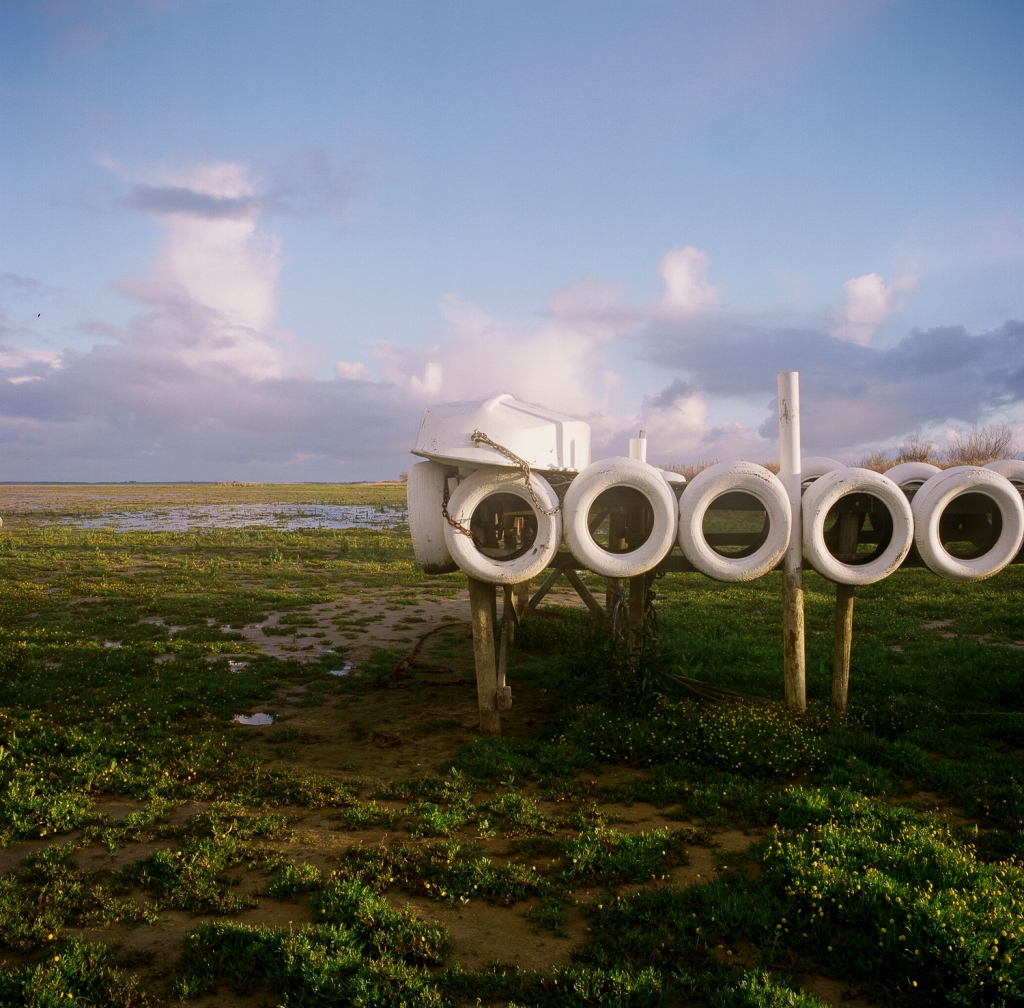
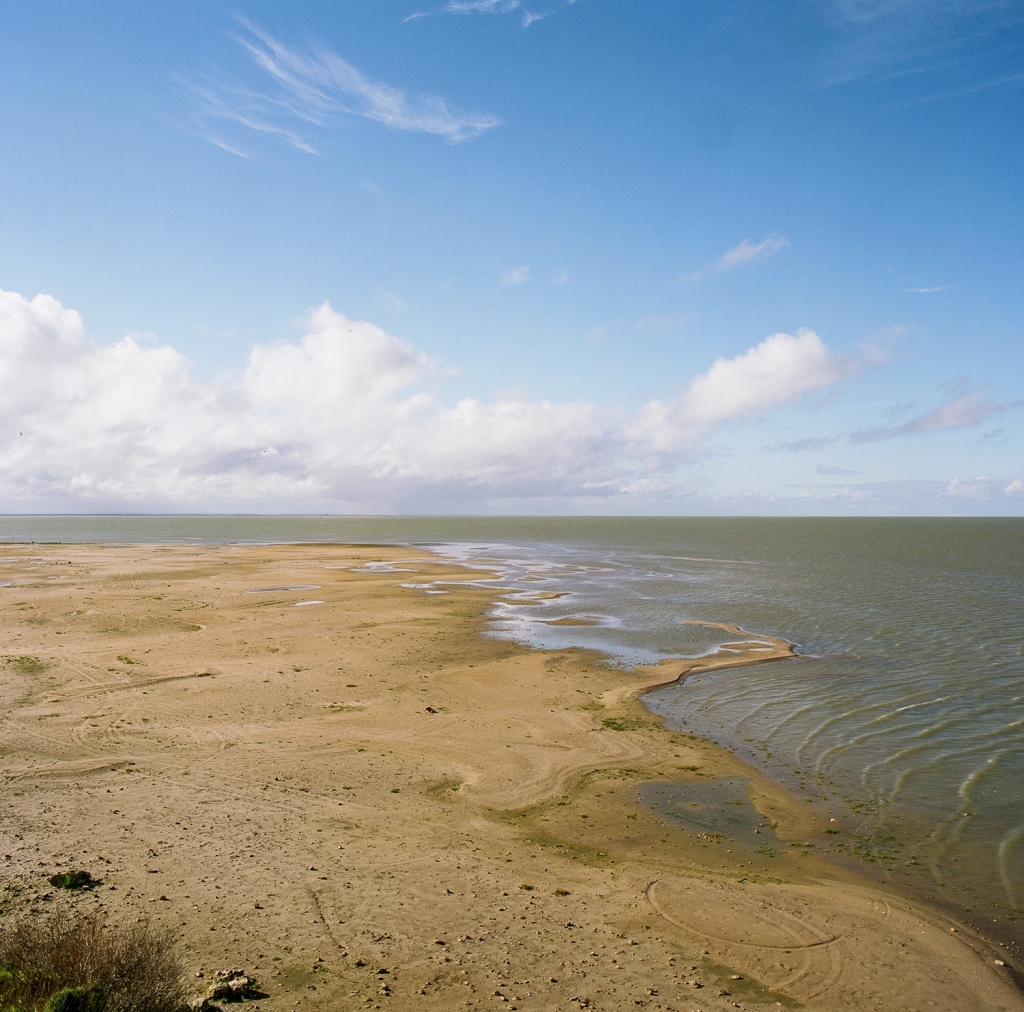
During the Millennium Drought I did some photography around the edge of the shallow freshwater Lake Alexandrina, including the the seaside towns of Clayton and Milang. At the time, given the absence of sufficient flows dredging was undertaken to keep the Murray Mouth open and to ensure salt and other pollutants could be flushed out…
-
Subscribe
Subscribed
Already have a WordPress.com account? Log in now.
 Nourishing Terrains