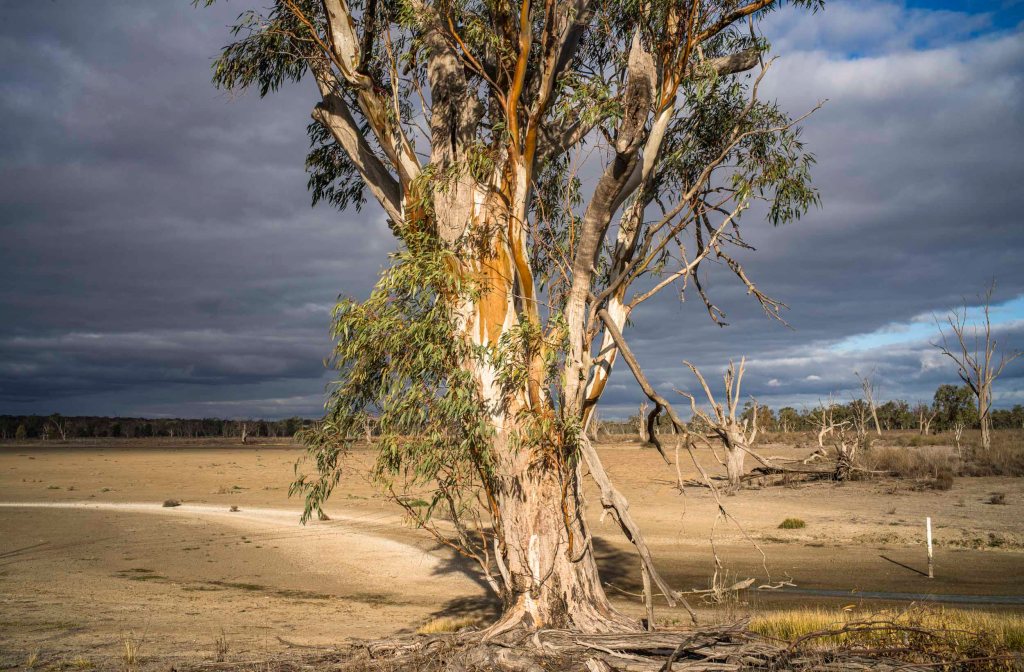
During the absence since the last post in 2021 I decided to continue with this reinvented project. The original title of the defunct Godson project was ‘Our water our country’. It is now called Nourishing Terrains. It has a new WordPress website, which is still a work in progress.
There is a nostalgic aspect to this project. Photographing at the Chowilla floodplain was where I restarted my photography after a decade’s absence after I’d finished the Bowden Archives and Industrial Modernity project in the mid-1990s. But it is not just nostalgia: it is also an important subject not just for South Australia, but for the Murray-Darling Basin.
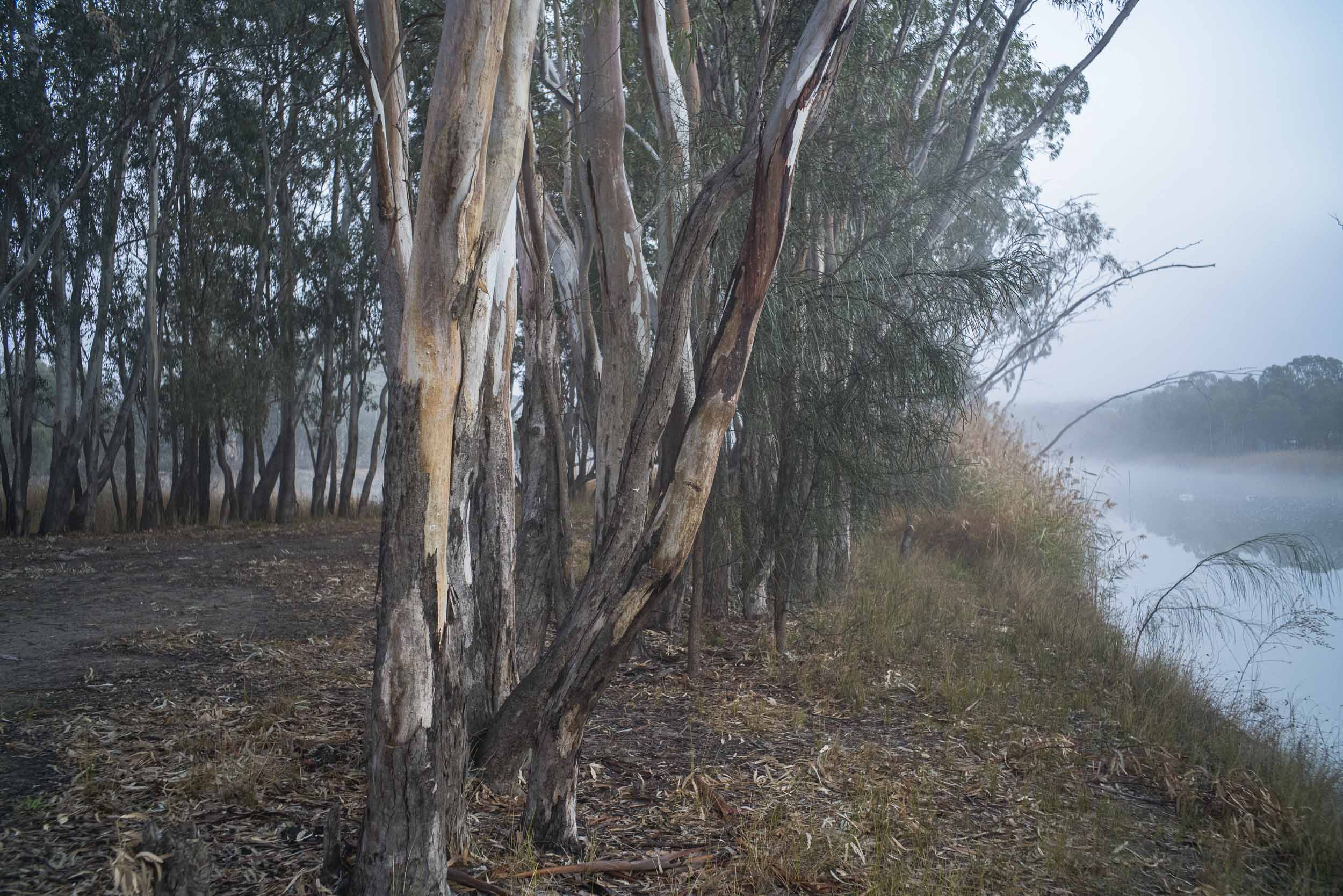
This was my campsite at Overland Corner on the 2019 roadtrip. It was next to the River Murray:
The photographs in Nourishing Terrains will link into or reference, various writings about the landscape, conservation, and the Anthropocene. A good place to start is Judith Wright, the poetess. She had a pastoral family background but developed a critical interpretation of of British colonisation; was aware of the threats to the environment in the 1950s; and from the 1960s acted to protect the environment and to generate respect for the experiences, cultures and ambitions of First Nations Australians.
I’ve just started reading Judith Wright Selected Writings. In her article ‘Conservation as a Concept’ published in Quadrant in 1968 Wright writes:
“At present we are vacillating wildly between the one extreme, where we look on ourselves as the triumphant conquerors of ‘nature’, and on the other, where we lapse into despair and seem to have no future at all in the face of our self-created problems.”
That account is still relevant today. The River Murray stands in the centre of these two extremes. In ‘Trees and Australians’ (1970) Wright traced these attitudes to nature to colonial settlement and its English law’s notion of the wasteland and private ownership. The pastoralists and farmers cleared the land of Australian trees to “improve” the land and obtain a tax break. It changed the face of the land and led to bad land use.
Update
The website has been changed over into WordPress’s new block system; the earlier blog posts now have featured images; two galleries have been created. So far so good.

 Nourishing Terrains
Leave a comment