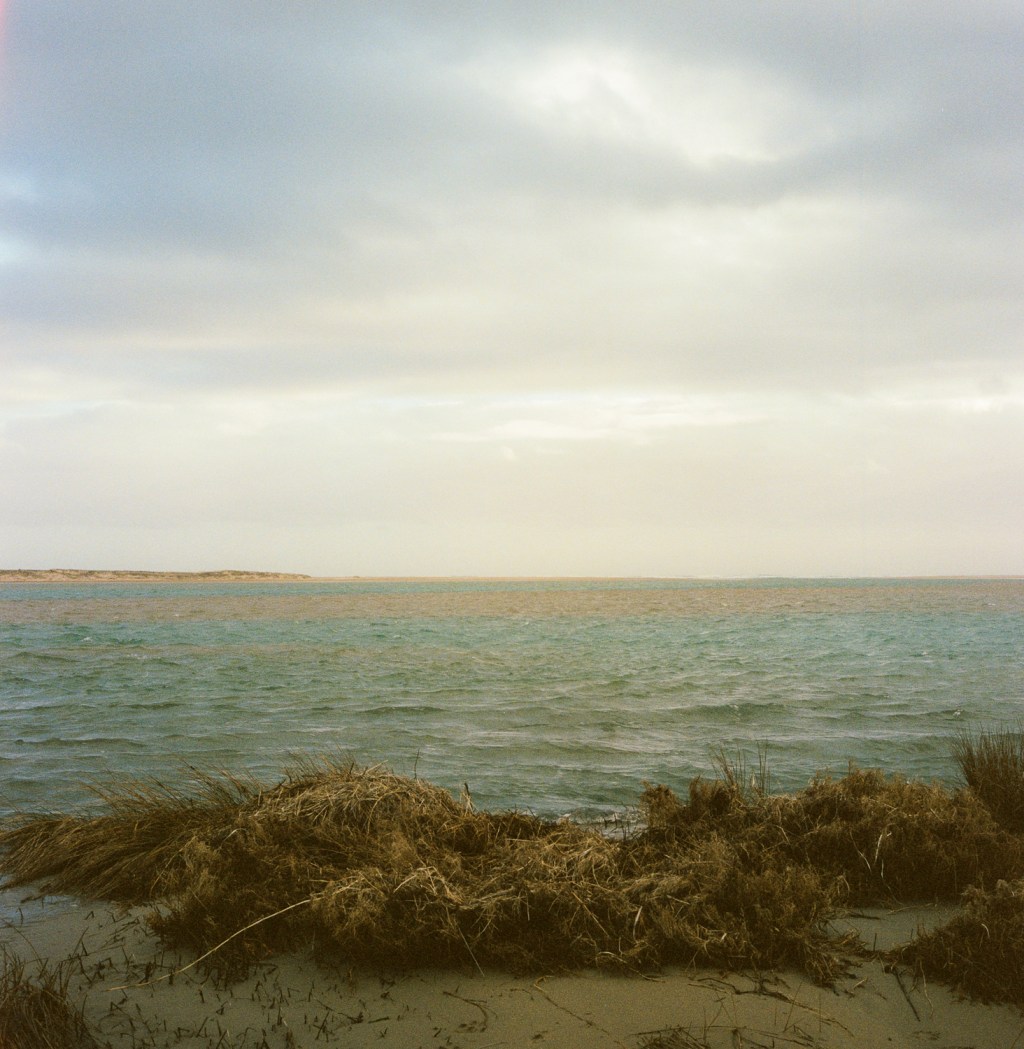
I am finding that many of the non-drought images of the River Murray and the Coorong in my archives are representations of natural beauty. This seems to me, when looking back on these images today, to be an inadequate way to photograph the River Murray and its various wetlands, given the damage to their ecological health from both the lack of environmental flows and the Millennium Drought.
This damage is particularly noticeable in the Coorong’s South Lagoon, and as this lagoon is currently in a stressed ecological state, so the conventional landscape style photographs of natural beauty are inappropriate.
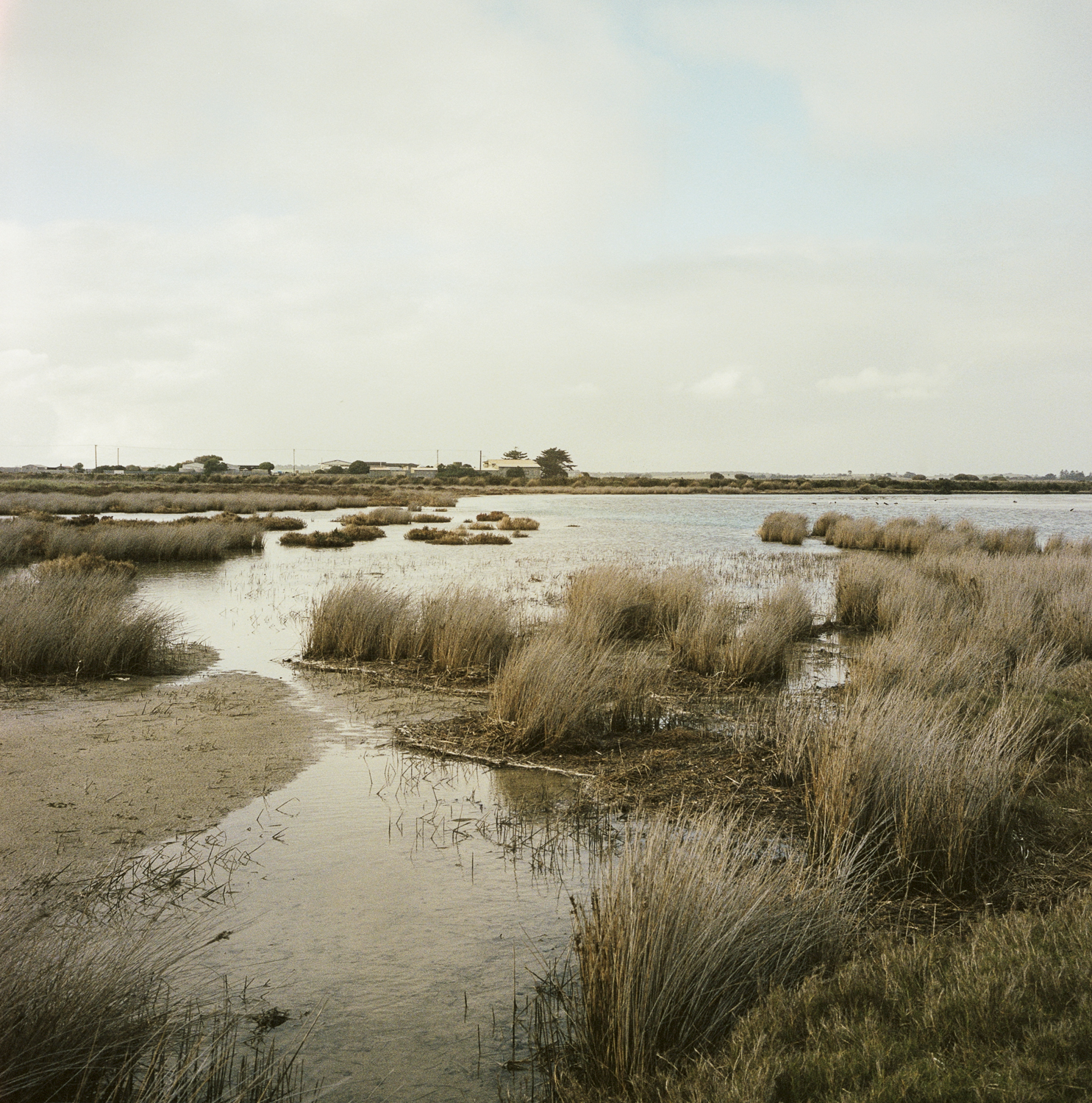
The problem with conventional landscape photography in Australia is that is usually about the beauty of the landscape as a natural wilderness, whilst the River Murray and its various wetlands are manufactured landscapes. Since the 20th century the rivers in the Murray-Darling Basin have been engineered for irrigated agriculture and these rivers have been, and are, managed for the benefit of irrigation and water for the various cities.
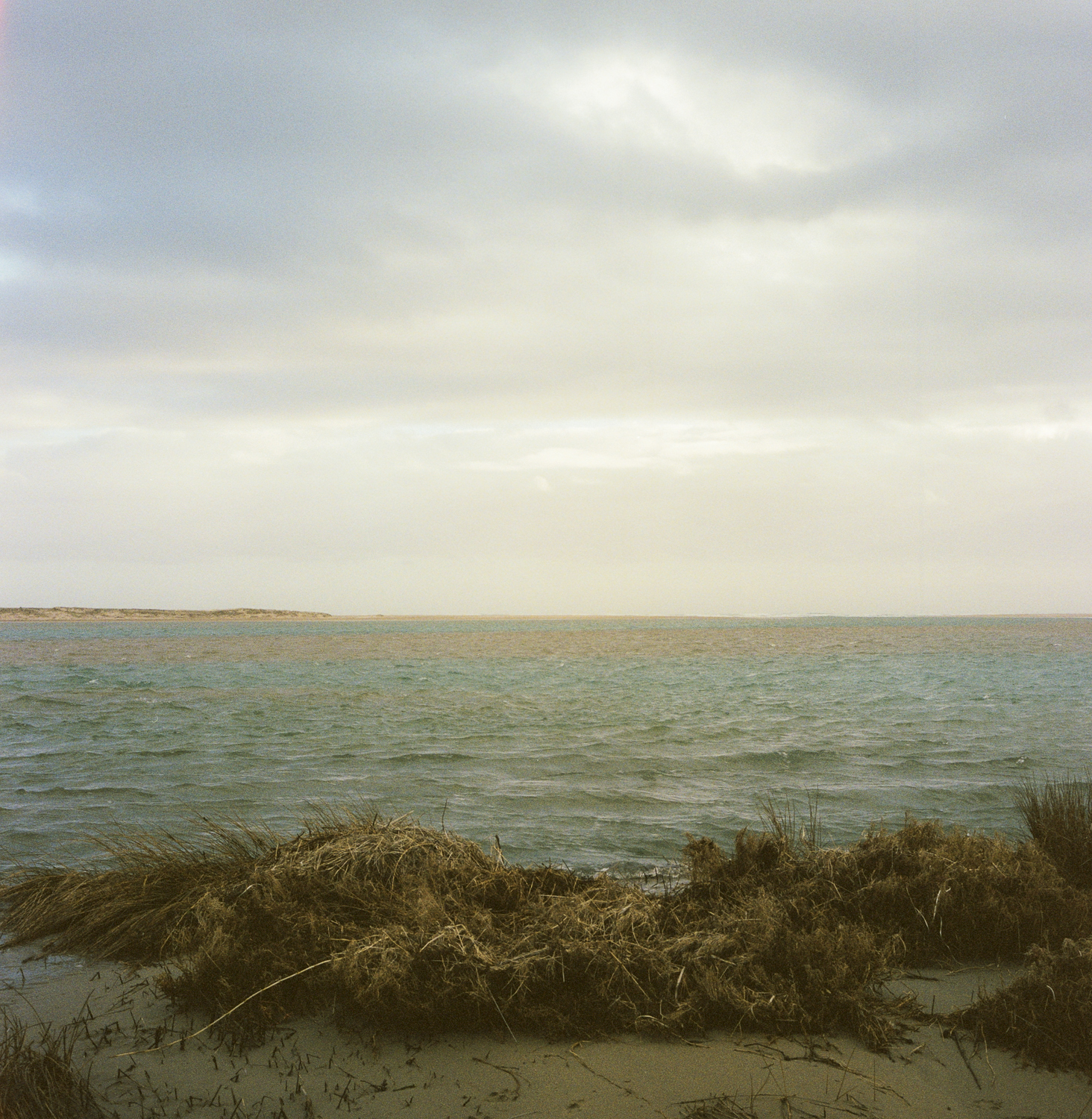
The above photo of the Murray Mouth, for instance, is aesthetically pleasing: it is a harmonious composition within the picturesque landscape tradition. What is not shown in the photo is that the Murray Mouth can only remain open if it is being constantly dredged, due to the lack of environmental flows.
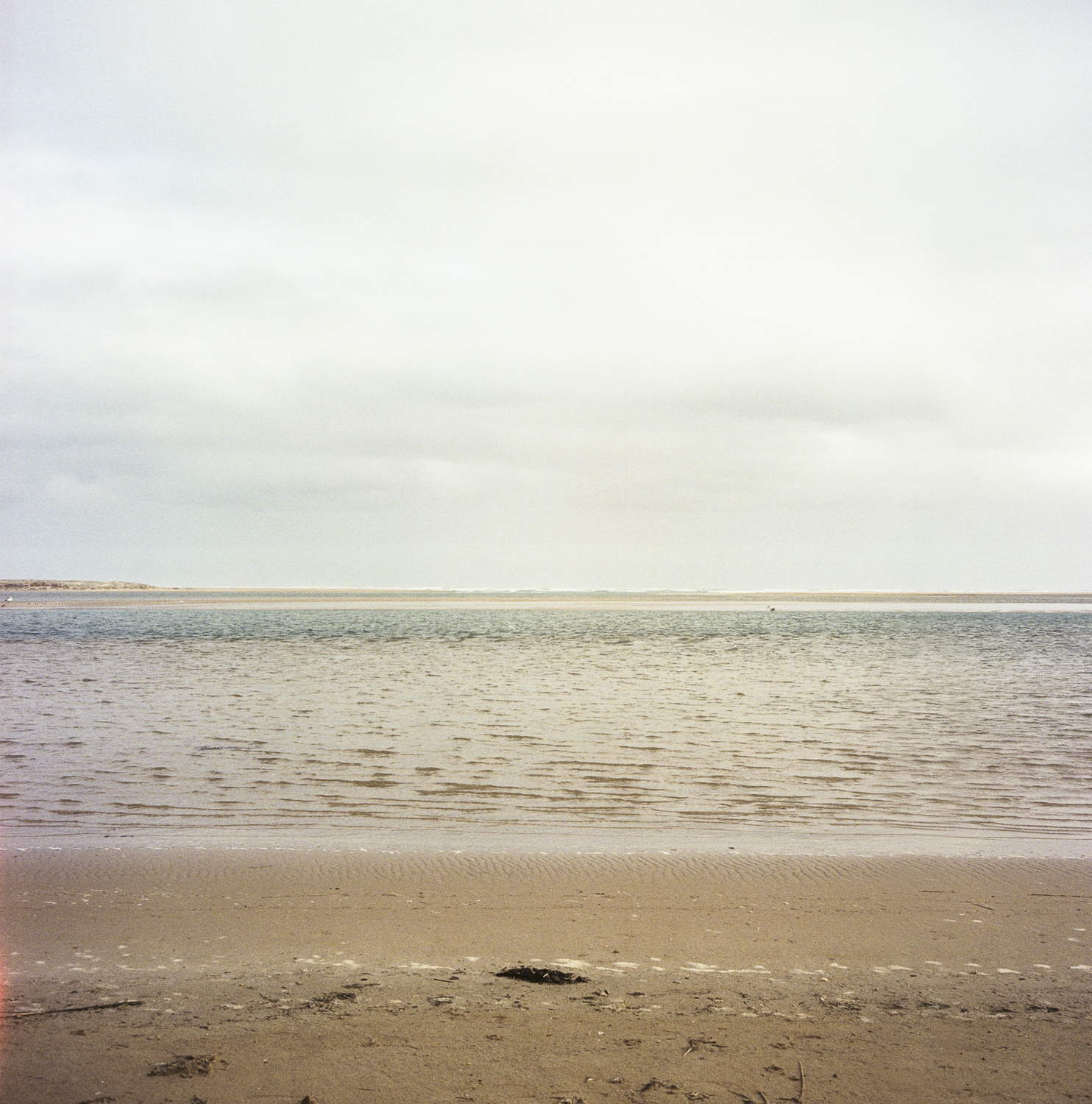
The above photo works with a picturesque aesthetic that uses a strong central horizon line and an arrangement of objects in the foreground that serve to anchor the image within a set perspective and scale. It works within the compositional conventions of landscape painting, such as the landscape format, vanishing-point perspective and the rule of thirds.
Rebecca McCauley says that the picturesque tradition in Australian landscape photography borrows from:
colonial legacies of image-making that rely strongly on a fixed point of perspective, presenting the image as a window onto a field of Western spatial and temporal correlations, further encoding a rational and mediated view of the world. These scenic views perform a normalising function to an outsider, rendering unfamiliar scenes visibly manageable and containable.
This colonial photography had two strands: one strand exemplified by Captain Sweet, Nicholas Caire and Charles Bayless in the 19th century and Harry Godson in the 20th century that highlights the civilised progress and the exploitation of natural resources, such as minerals, arable land and timber. The other strand is the picturesque wilderness one exemplified by Nick Rains or Peter Eastway is constructed as a part of picturesque tourism: the travelling photographer creates generalised images designed to build a typical picture of a country or region.
The picturesque stand in the Australian landscape tradition searches for paradigmatic landscapes that helped map the routes of picturesque tourism. Such images reinforce the notion of the natural beauty for purposes of national identity, a concept that is bound up in what Benedict Anderson terms imagined communities, whereby the shared sense of nationhood you feel is reinforced through cultural symbols, in this case our affinity for the Australianness of the landscape in the face of progress and social development.
So Australian landscape photography is socially constructed, as opposed to merely being the result of the aesthetic or personal agenda of the photographer.
The Australian photographic emphasis on the natural beauty of wilderness in landscape photography is misleading in so far as there is no reference to human presence or activity; no visible signs of natural history; no scars from clearing the land and taming the wild river to make it suitable for the extraction of water for irrigated agriculture, towns and cities.
Given the projections of the negative effects of climate change for the Murray-Darling Basin, there is a need to move beyond natural beauty and the picturesque to construct oppositional landscapes that are based around interpretations of the collision between nature and society.

 Nourishing Terrains
Leave a reply to at Barmah National Park – The Bowden Archives and Other Marginalia Cancel reply